WHEN A NATION STOOD SHATTERED BY TRAGEDY IN 1968, ELVIS PRESLEY REJECTED A COMFORTABLE HOLIDAY SCRIPT TO DELIVER A STIRRING ANTHEM FOR PEACE.
By late 1968, the United States was reeling from one of the most turbulent years in modern history. The assassinations of Dr. Martin Luther King Jr. in Memphis and Senator Robert F. Kennedy in Los Angeles had deepened national grief and social division. For Elvis Presley, who had spent years making lighthearted Hollywood movies, the moment demanded something far more meaningful than commercial routine.
When NBC and sponsor Singer approached him to headline a primetime television special scheduled for December, his longtime manager, Colonel Tom Parker, insisted on a traditional holiday program. The manager envisioned a light, family-friendly show concluding with standard Christmas carols. But director Steve Binder had a different vision—one that aimed to showcase Elvis as a raw, relevant, and vital musical force.
During late-night discussions in Los Angeles, Elvis and Binder talked candidly about the turmoil surrounding the country. Elvis expressed a profound desire to speak directly to the social consciousness of the era rather than hide behind formulaic entertainment. Working quietly to bring that intention to life, Binder approached vocal arranger and songwriter Walter Earl Brown with an urgent request: create a song that captured the singer’s deep longing for unity, understanding, and human dignity.
When Brown presented the demo of what would become a soaring gospel-infused plea for a better world, Elvis listened intently. Deeply affected by the sentiment and message, he stated clearly that he would never perform another song he did not truly believe in.
The creative choice sparked a quiet standoff behind the scenes. Colonel Parker initially pushed back, arguing that a socially conscious anthem had no place in a holiday broadcast and insisting that holiday tunes remain the centerpiece. Yet Binder and Elvis stood firm, preserving the new track as the definitive closing statement of the broadcast.
During the recording session at Western Recorders in Hollywood, the atmosphere turned electric. Recording in near darkness to capture the full raw power of his voice, Elvis poured everything into the vocal takes. The intensity of his delivery moved the backing vocalists, The Blossoms, to tears as the room filled with an unmistakable sense of urgency.
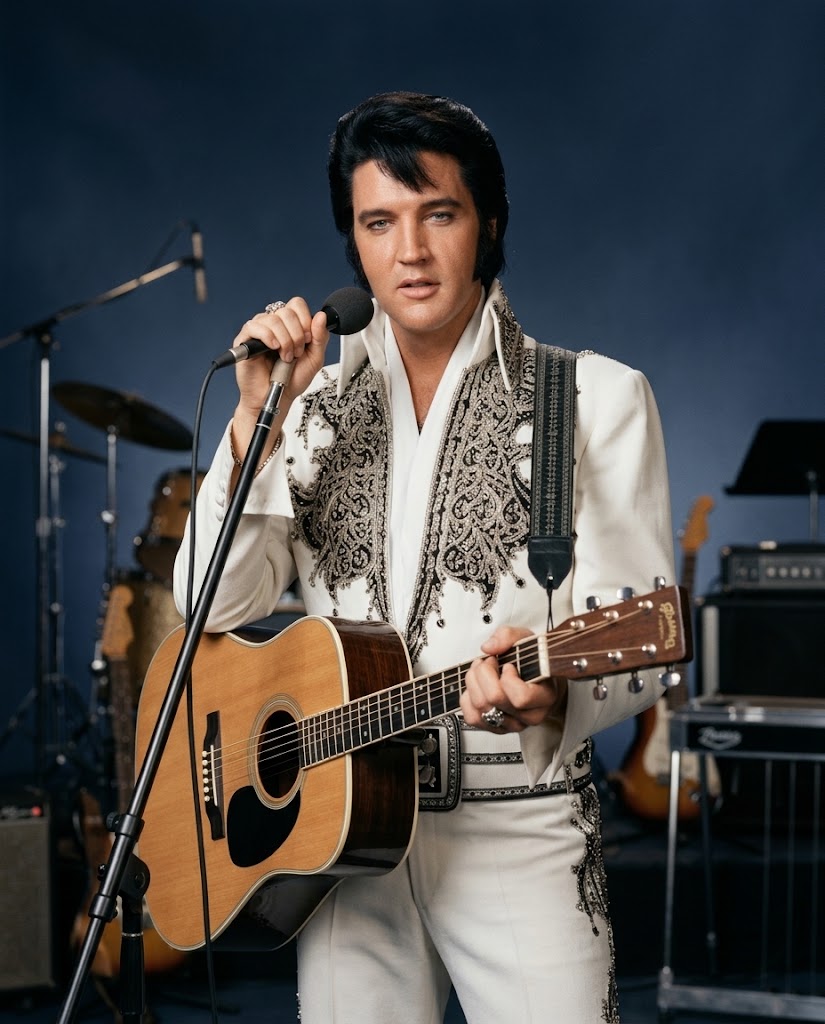
When the finale was filmed before the cameras, the visual presentation was striking in its simplicity. Elvis stood alone in a tailored white two-piece suit on a stark dark stage, illuminated only by towering red marquee lights spelling his name.
There were no elaborate dance routines, comedic sketches, or holiday decorations. Backed by a full orchestra, he delivered an impassioned performance that blurred the lines between country soul, rhythm and blues, and traditional Southern gospel. His voice carried a universal message about replacing doubt, fear, and division with understanding, brotherhood, and enduring hope.
As the arrangement swelled toward its monumental finish, Elvis threw his entire physical and emotional weight into the music. By the final resonant note, completely exhausted, he dropped to his knees on the studio floor before rising quietly to face the room.
When the television special aired across the country on December 3, 1968, it drew tens of millions of viewers and achieved the network’s highest ratings of the season. Beyond the television success, the broadcast marked a decisive turning point that revitalized his career and reaffirmed his standing as an authentic American artist.
Decades later, that performance stands as a rare moment when a mainstream entertainer set aside commercial safety to meet history with honesty. The quiet courage behind the broadcast transformed a simple television finale into an enduring testament to peace.