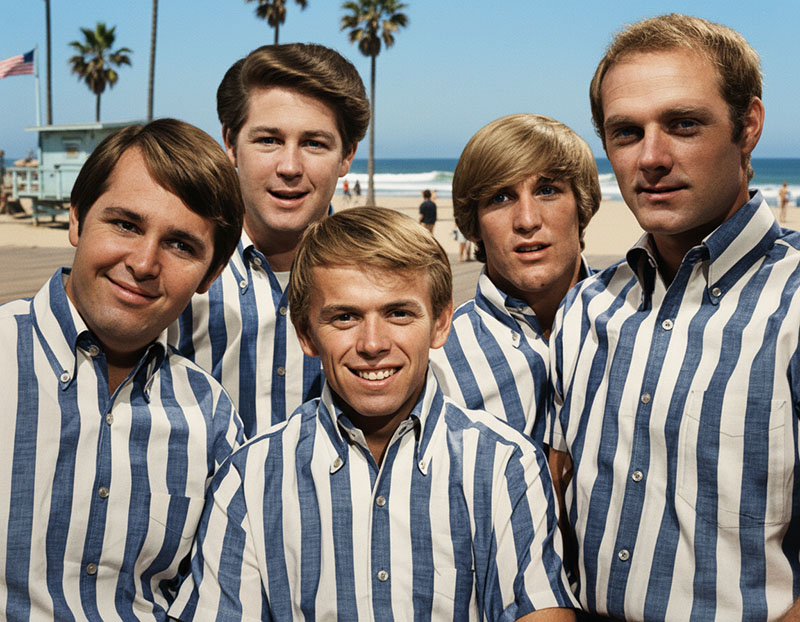
HELP ME, RHONDA WAS BUILT LIKE A PARTY RECORD — BUT UNDER THAT SUNLIGHT, A BROKEN HEART WAS ASKING TO BE SAVED.
At first, it sounds simple.
A bright guitar. A teenage name. A chorus made for car radios, beach towels, and summer afternoons when the whole world still seemed young enough to be healed by a song.
“Help Me, Rhonda” did not arrive dressed like heartbreak.
It came smiling.
That was the magic of The Beach Boys. They could take loneliness, rejection, confusion, and longing, then send it out into the world wearing harmonies so golden that people almost forgot there was pain underneath.
Almost.
The song moves like a boy trying not to admit he has been hurt. He has lost one girl. He cannot shake the memory. He is not asking for wisdom. He is not asking for time.
He is asking for Rhonda.
Not because Rhonda is a grand solution. Not because love is suddenly simple. But because sometimes, when the heart is young and embarrassed by its own ache, it reaches for the nearest lifeline it can name.
That is what makes the song last.
Behind the bounce, behind the handclaps, behind that unmistakable California glow, there is something deeply human: the need to outrun a memory before it catches you alone.
The Beach Boys made it sound effortless, but their best music was rarely as innocent as it first appeared. Those harmonies were not just pretty. They were architecture. Each voice leaned against the next, as if no single person could carry the feeling alone.
That is why “Help Me, Rhonda” still hits differently decades later.
It is not only a song about getting over someone.
It is a song about the little performances people put on when they are hurting. The grin at the diner. The joke in the car. The record turned up too loud so nobody hears the silence underneath.
For many listeners, the song became part of a specific American memory: a dashboard radio, a warm night, a group of friends singing louder than they needed to, everyone pretending that youth would never end.
But youth does end.
The people in the car grow older. The summers get farther away. The names change. The one who broke your heart becomes a memory you may not even speak aloud anymore.
Then the song comes on.
And suddenly, there you are again.
Not in history. Not in a museum. Not reading about a famous band from California.
You are back in a room, or on a road, or standing next to someone you once thought would stay.
That is the secret strength of “Help Me, Rhonda.” It never begs to be taken seriously. It does not slow down and announce its sadness. It keeps moving, almost too fast, as if stopping would make the hurt real.
That may be the most honest part of all.
Some heartbreak does not arrive with violins. Sometimes it arrives with a beat you can dance to, because the body is trying to survive what the heart has not yet understood.
The Beach Boys gave America a sound full of sunshine. But inside that sunshine were shadows — small ones, human ones, the kind everyone carries.
And “Help Me, Rhonda” remains one of those rare records that can make a crowd smile while quietly reminding each person of a name they once tried to forget.
Maybe that is why it still belongs to the radio.
Not because it is trapped in the past.
Because every generation eventually learns what the song knew all along: sometimes the happiest music is not free of pain.
Sometimes it is just pain that found a way to sing with the windows down.