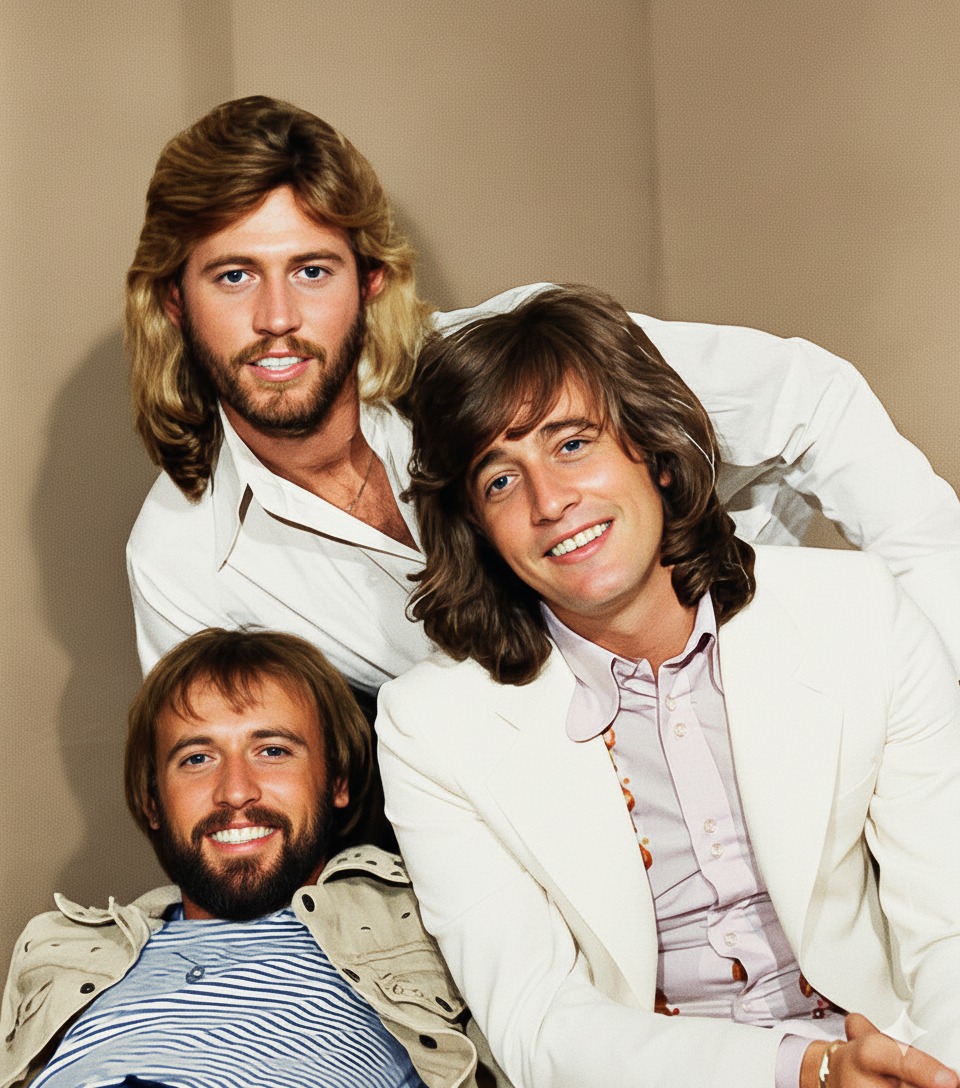
ALL AROUND MY CLOCK WAS A SMALL SONG — BUT IT HELD THE SOUND OF YOUNG MEN MEASURING TIME BEFORE FAME SWALLOWED THEM.
Some Bee Gees songs feel carved into history.
“All Around My Clock” feels like something found in a drawer.
Not forgotten because it had no value, but hidden because the world was busy chasing the larger flames — the grand ballads, the falsetto storms, the disco lights, the heartbreak anthems that would later make the Gibb name impossible to ignore.
But this little 1967 song carries a different kind of magic.
It belongs to that early Bee Gees world where everything still felt slightly strange, delicate, English, theatrical, and wide-eyed. Before the brothers became symbols of an era, they were still young songwriters trying to turn odd thoughts, private rooms, and restless emotions into pop music that did not sound quite like anyone else.
“All Around My Clock” is not built to conquer a stadium.
It sounds closer than that.
Like a young man sitting indoors while life passes by outside the window. Like hours moving around him while he tries to understand why everyone else seems to know where they are going. There is something almost childlike in its shape, but underneath that childlike surface is a feeling many people know too well.
The ache of watching time move when you do not feel ready to move with it.
That was one of the Bee Gees’ early gifts. Even when they dressed a song in bright colors or curious little phrases, loneliness could still slip through the cracks. Their harmonies did not simply make things pretty. They made small feelings sound haunted.
In 1967, the Bee Gees were stepping into a world much bigger than the one they had known. The British pop scene was changing by the week. Psychedelic sounds were blooming. Songs were becoming miniature films. Young bands were no longer just expected to entertain; they were expected to dream out loud.
The Bee Gees did that in their own peculiar way.
They did not always roar.
Sometimes they whispered from behind a curtain.
“All Around My Clock” feels like one of those whispers. It is brief, almost fragile, but it opens a door into the part of the Bee Gees story that is easy to miss: before the fame became enormous, before grief became part of the legend, before the world learned to recognize their voices instantly, they were already writing about isolation, observation, and the strange pressure of passing time.
That is the emotional contrast hiding inside the song.
The Bee Gees would become timeless.
But here, they sound surrounded by time.
Every hour matters. Every small image feels like it is trying to hold still before the next one disappears. The song does not need to explain its sadness. It lets the clock do the talking.
And that is where it becomes human.
Because everyone has had a season like that — a season where the world outside seems busy and bright, while inside you are counting minutes, watching shadows, wondering why life feels so far away even when it is happening right in front of you.
Maybe it was a bedroom in your parents’ house.
Maybe it was a small apartment after a long day.
Maybe it was a quiet afternoon when the radio was on, but nothing in the room felt easy.
That is the kind of place “All Around My Clock” understands.
It does not offer the grand release of a famous Bee Gees chorus. It does not arrive with the ache of “To Love Somebody” or the cinematic weight of “Massachusetts.” Instead, it gives us something smaller: the sound of young creativity before it knows what shape its future will take.
There is a tenderness in hearing it now.
You listen with everything that came later in mind — the glory, the backlash, the comebacks, the losses, the brotherhood, the harmonies that survived decade after decade — and suddenly this little early song feels like a photograph of boys before the storm.
Not innocent in a simple way.
But still unguarded.
Still searching.
Still close enough to the beginning that time had not yet turned them into myth.
That is why “All Around My Clock” matters. Not because it is the song most people name first. Not because it changed pop music overnight. But because it preserves a quieter truth about the Bee Gees: before they became the sound of an era, they were already listening to the small machinery of the heart.
A clock.
A room.
A few strange lines.
Three brothers learning how to make loneliness sing.
And somewhere in that brief, flickering song, you can hear time circling them — not as an enemy yet, but as a warning, a companion, and a promise.
The world would come later.
For a moment, all they had was the song.
And the clock kept going.