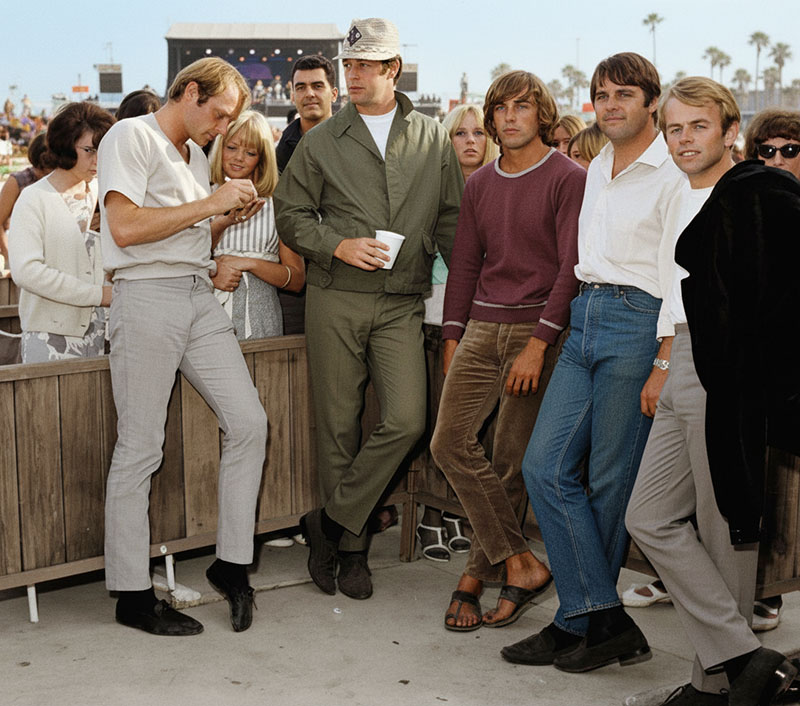
DO IT AGAIN SOUNDED LIKE A RETURN TO THE BEACH — BUT UNDERNEATH IT WAS A BAND TRYING TO TOUCH ITS OWN YOUTH AGAIN.
Some songs look backward with sadness.
“Do It Again” looks backward with the windows down.
It does not arrive like a confession. It arrives with drums snapping, voices rising, and that familiar Beach Boys glow coming back over the horizon like summer had only stepped away for a minute. On the surface, it is a bright celebration — surf, girls, old times, and the golden California myth they had helped build in the first place.
But listen closer.
There is a deeper ache inside the joy.
By 1968, The Beach Boys were no longer simply the boys of endless summer. The world had changed. The band had changed. The clean innocence of the early surf years had been stretched by fame, pressure, experimentation, disappointment, and the strange weight of growing older while the public still wanted you to sound forever young.
That is what makes “Do It Again” so powerful.
It is not just about wanting to surf again.
It is about wanting to feel like yourself again.
The title sounds simple, almost casual. Do it again. Go back. Call the old friends. Find the old beach. Turn the car toward the coast. Let the water, the sun, and the music put everything back where it used to be.
But life does not really work that way.
And somehow, the song knows it.
The Beach Boys could have made nostalgia feel heavy, but instead they made it move. They wrapped the longing in a rhythm that feels like a memory with a heartbeat. The harmonies come in not as decoration, but as a kind of reunion — voices gathering around the old dream, trying to see if it still fits.
That is the human detail at the center of the song.
A grown person reaching for an old feeling and discovering it still glows, even if it no longer belongs to the present in the same way.
Everyone knows that feeling.
Maybe it is not a beach. Maybe it is an old street, a high school gym, a first car, a diner booth, a summer job, a lake house, a jukebox in a place that has since been torn down. Maybe it is a group of friends who once seemed permanent, before time scattered them into marriages, mistakes, distance, illness, silence, and lives that became too full to gather easily.
Then one song comes on.
And suddenly, you want to do it again.
Not because the past was perfect.
Because something in you was alive there.
That is the quiet truth “Do It Again” carries. It understands nostalgia not as a fantasy, but as a need. Sometimes people return to old songs because they are trying to find proof that a younger, lighter version of themselves really existed.
The Beach Boys were singing that proof into the room.
There is a moment in the record where the brightness almost hurts. The sound is so familiar, so sunlit, so close to the early mythology, that you can feel both things at once: the thrill of return and the sadness of knowing return is never complete.
That is where the song catches in the throat.
Because “Do It Again” is not only the sound of young men remembering the beach.
It is the sound of time turning around and looking at them.
The waves are still there.
The old harmonies still rise.
But everybody has changed.
That tension gives the song its soul. The Beach Boys were not pretending nothing had happened. They were reaching back through everything that had happened — through fame, through artistic pressure, through shifting pop culture, through the burden of being expected to remain a symbol of youth — and trying to touch the place where it all began.
And for a few minutes, they did.
That is why “Do It Again” still feels alive after all these years. It is not just retro. It is not just a revival of surf music. It is a song about the ache of return, sung by the very people who made the place worth returning to.
The Beach Boys gave America the sound of summer.
With “Do It Again,” they gave us the sound of missing summer.
There is a difference.
One belongs to the moment.
The other belongs to memory.
And when those voices come back through the speakers, bright but older, familiar but changed, the past does not fully return.
It does something better.
It waves from the shoreline.
And for three minutes, we are all young enough to wave back.