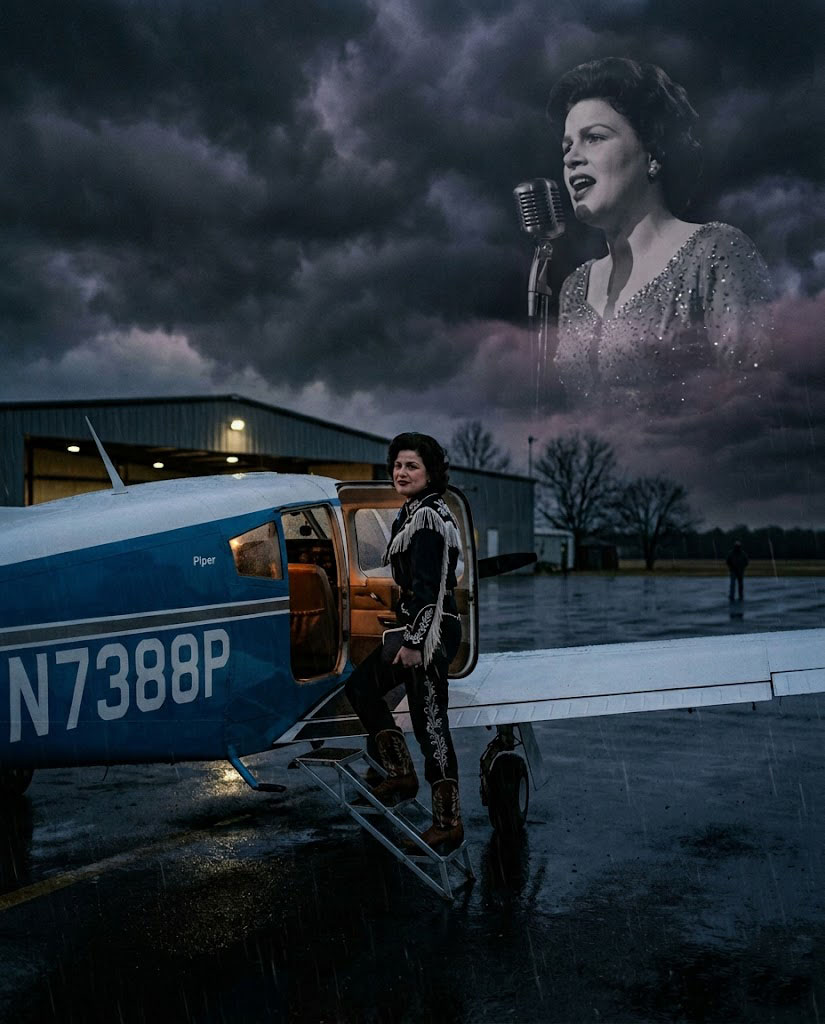
IT LOOKED LIKE A PERFECT AFTERNOON FOR A FLIGHT—UNTIL THE SONG SANK INTO THE PACIFIC…
On October 12, 1997, John Denver took his experimental aircraft into the sky over Monterey Bay. He was alone, flying a plane he had recently purchased, enjoying the crisp California air.
The man who taught the world to love the mountains and the “sunshine on my shoulders” never returned to the shore. By sunset, the music had stopped, leaving only the sound of the waves against the coast.
It was a quiet ending for a voice that had filled stadiums and touched millions of hearts across the globe.
THE MAN AND THE SKY
John Denver was more than a singer; he was a licensed pilot with over 2,700 hours of flight time. He felt a deep, spiritual connection to the heavens, often saying that being in the cockpit felt like a form of prayer.
To his fans, he was the face of the 1970s folk-country movement. He sold millions of records, won every award imaginable, and became a fierce advocate for the environment long before it was a common cause.
He sang of country roads and old guitars. He spoke for the trees and the wild places. But on that Sunday afternoon, he wasn’t a superstar or an activist. He was just a man who loved the freedom of the clouds.
The plane he was flying that day was a Long-EZ, a sleek and experimental craft built for efficiency. It was a beautiful machine, but it had a small, fatal quirk.
The fuel selector handle was located in a difficult spot, tucked away behind the pilot’s left shoulder. To reach it, a pilot had to turn their body and brace themselves against the rudder pedals.
THE SILENT NOBILITY
Witnesses on the shore saw the plane flying steady and low. There was no smoke, no frantic maneuvers, and no radio call for help.
In a single, quiet moment, the engine coughed and went silent. Investigators later believed John had run out of fuel in one tank and struggled to reach the handle to switch to the backup.
In that final stretch of seconds, there was no panic recorded. Just the wind rushing past the canopy and the vast, blue horizon of the Pacific Ocean waiting below.
He went out exactly as he lived—looking for a higher perspective and a better view of the world he loved so much.
The impact was swift. The ocean, which he had celebrated in his songs about the “Calypso” and the deep sea, became his final resting place.
When the news reached the mountains of Colorado, the world seemed to grow colder. People gathered in small towns and big cities, singing his lyrics back to the stars, trying to fill the sudden silence.
A LEGACY WRITTEN IN THE WIND
Nearly three decades have passed since that afternoon in Monterey. The wreckage is long gone, and the headlines have faded into the archives of history.
Yet, his voice remains a permanent part of the American landscape. You hear it in the quiet of a forest or the hum of tires on a long stretch of highway.
He didn’t leave behind a story of tragedy or bitterness. He left behind a reminder to look up, to breathe deep, and to care for the earth beneath our feet.
The empty cockpit was not a sign of defeat. It was the final chapter of a man who spent his entire life trying to reach the light.
The song didn’t end that day; it simply changed its frequency to match the rhythm of the tide.
The sky still holds the echo of his flight.
The mountains still remember his name.
And the country roads still lead us back to the peace he finally found…